Introduction
If you already own a sliding gate, you have done half the job. The gate is fabricated, installed and working, but you still have to step out of your car, open it by hand, drive through and then close it again. In rain, summer heat or late at night, that routine gets old quickly. This is why so many homeowners, housing societies, factories and commercial property owners ask the same question: what is the cost to automate an existing sliding gate in India?
The honest answer is that there is no single figure that fits every gate. The budget depends on your gate’s size and weight, the type of sliding gate operator you choose, the safety accessories you add and the condition of the gate itself. This guide explains each factor in plain language, so you can plan properly, ask suppliers the right questions and avoid paying for things you do not need.
The guidance below reflects how gate automation projects are commonly assessed and installed across Indian homes, residential complexes, schools, warehouses and industrial sites.
Can an Existing Sliding Gate Be Automated?
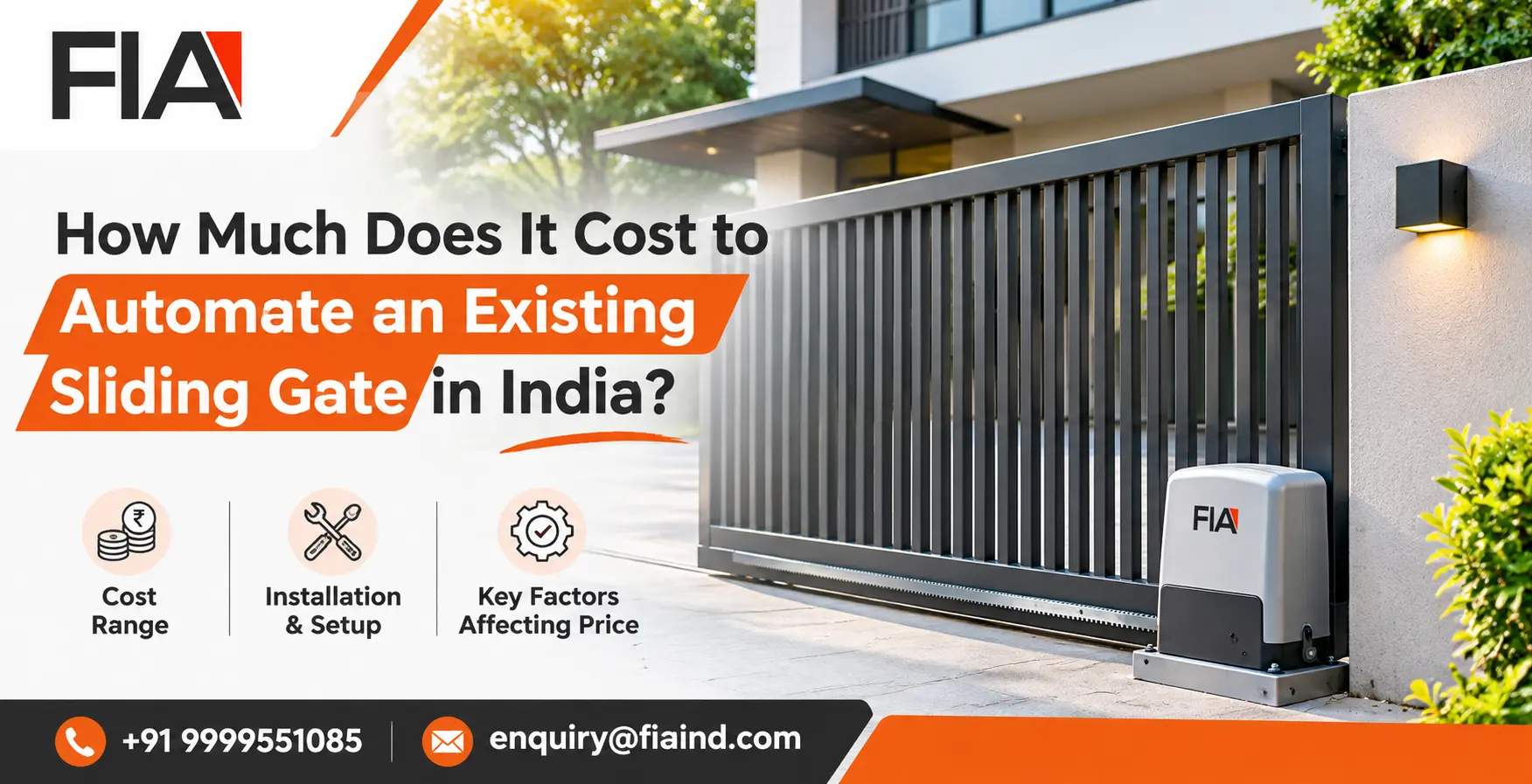
In most cases, yes. A manual sliding gate that rolls smoothly on wheels or a track can usually be converted with a sliding gate motor (also called a sliding gate opener). You do not need to replace the gate. The operator is mounted on a base plate beside the gate, and a toothed rack is fixed along the gate’s length. The motor’s pinion gear engages the rack and moves the gate open and closed.
Before anyone recommends a product, a good installer will check three things:
- Does the gate move freely? A gate that you can push with one hand is a good candidate. If it is stiff, jerky or heavy to move, the problem needs fixing first.
- Is the structure sound? Cracked frames, damaged wheels, a bent track or loose guides will cause trouble after automation.
- Is there enough space? The motor needs room beside the gate, and the gate needs a clear path to travel fully open.
What Decides the Cost to Automate an Existing Sliding Gate in India?
Instead of chasing a quick number, it is more useful to understand what actually drives the quotation. These are the main factors.
1. Gate Weight and Length
This is the single biggest factor. A light residential gate and a heavy industrial gate need very different motors. Operators are rated by the maximum weight they can move, and choosing one that is too small will lead to overheating, slow response and early failure. Choosing one that is far too large means paying for capacity you will never use.
When requesting a quote, share the gate’s approximate weight, length, height and material (mild steel, aluminium, stainless steel or wrought iron). If you do not know the weight, a site visit is the safest way to assess it.
2. Type of Sliding Gate Operator
Not all operators are built the same. The main options you will come across are:
- AC sliding gate motors: Reliable and widely used for regular residential and commercial gates.
- DC sliding gate motors: Offer smoother starts and stops, soft-close features and often work with battery backup, which is useful in areas with frequent power cuts.
- Heavy-duty industrial operators: Designed for high-frequency use at factories, logistics yards and large campuses.
- Rail-less or rack-free options: Suitable for specific layouts where a conventional rack is difficult to install.
The type you select affects performance, noise level, duty cycle and long-term maintenance, and therefore the overall project budget.
3. Usage Frequency (Duty Cycle)
A gate opened a few times a day at a bungalow has very different needs from a society gate that cycles hundreds of times daily. Operators with a higher duty cycle are built with stronger gears, better cooling and sturdier electronics. Be realistic about how often the gate will run.
4. Safety Accessories
Safety should never be treated as optional. A moving gate can injure people, pets or vehicles. Common safety and control components include:
- Photocell sensors that stop or reverse the gate when something blocks its path
- Safety edges on the leading edge of the gate
- Flashing warning lamps to alert people that the gate is moving
- Limit switches to control the open and close positions precisely
- Obstacle detection built into the control board
These add to the project scope, but they protect your family, your visitors and your vehicles.
5. Control and Access Options
Most operators come with remote controls, but you can extend convenience with:
- Extra or multi-channel remote transmitters
- Wall push buttons and key switches
- Keypads and intercom integration
- Smartphone or Wi-Fi based control modules
- RFID, access cards or boom-barrier style entry management for societies and offices
- Automatic closing timers
The more access points you want, the more the system will include.
6. Power Backup
Power cuts are common in many parts of India. If you want your gate to work during an outage, consider a battery backup or a DC-based operator with a UPS-style option. Without backup, most operators have a manual release so you can still move the gate by hand, but automation convenience is lost until power returns.
7. Gate Condition and Preparation Work
Sometimes the gate needs attention before automation. Typical preparation work includes replacing worn wheels, straightening or re-laying the track, adding end stoppers and guides, welding a support for the rack, or building a concrete base for the motor. This is often the reason two similar-looking gates end up with different final budgets.
8. Installation Site and Wiring
The distance between the motor and the power source, the need for underground conduit, earthing and weather protection, and whether the gate faces direct sun, coastal air or heavy rain all influence the work involved. Good wiring and proper earthing are essential for safety and long life.
9. Brand, Warranty and After-Sales Support
Where the operator comes from matters. A reputed brand with spare parts availability, trained technicians and a clear warranty gives you peace of mind. A very cheap, unbranded motor may look attractive at first, but if spares are unavailable or service is poor, the real cost shows up later.
Parts of a Typical Sliding Gate Automation Kit
Understanding what you are buying makes it easier to compare quotations fairly. A standard kit generally includes:
- Sliding gate motor (operator)
- Control panel or control board
- Rack (usually nylon-covered steel or galvanised steel)
- Remote transmitters and receiver
- Photocell sensors
- Warning lamp
- Limit switches and mounting base plate
- Manual release key or lever
When you compare offers from different suppliers, check that each one lists the same items. A lower quote may simply leave out safety sensors, the rack or a warning lamp.
Common Mistakes to Avoid When Automating a Gate
Choosing a motor only on the basis of the lowest quote. Underpowered or poor quality operators tend to fail early, and repeated repairs cost more than doing it right the first time.
Ignoring gate condition. Automation will not fix a gate that is out of alignment. It will only put more strain on the motor.
Skipping safety devices. Photocells and warning lamps are small additions that prevent serious accidents.
Hiring untrained installers. Poor alignment, loose racks and wrong wiring cause noise, wear and unsafe operation. Always prefer installers with demonstrated experience.
Not asking about warranty and service. Find out what is covered, for how long, and who will respond when you call.
How to Get an Accurate Quotation
A reliable quotation starts with good information. Here is a simple process to follow:
- Take photos and measurements of your gate, including length, height, track and the space beside the gate.
- Note how the gate is used: daily frequency, vehicle type, and whether it is for a home, society, office or factory.
- Decide your must-have features, such as battery backup, mobile control or access cards.
- Request a site inspection. A physical visit is the only way to confirm gate weight, alignment and wiring requirements.
- Ask for an itemised quotation that lists every component, installation scope, warranty terms and after-sales support.
- Compare like with like, checking operator capacity, safety accessories and service commitments rather than the bottom line alone.
Benefits of Automating Your Existing Gate
Automation is an investment in daily comfort and security, not just a convenience.
- Convenience: Open and close the gate from inside your vehicle with a remote or phone.
- Security: Gates close automatically, reducing the chance of leaving the entrance open.
- Safety: You no longer need to step out on busy roads or in bad weather.
- Property appeal: An automatic gate gives your property a modern, professional look.
- Reduced wear: A controlled start and stop is gentler on the gate than hard manual pushing.
- Smart integration: Many systems connect with intercoms, CCTV and access control.
Maintenance and Long-Term Value
A well-installed sliding gate operator can serve for many years with basic care. Keep the track clean and free of debris, lubricate wheels and moving parts as recommended, check the rack and pinion for wear, test the safety sensors regularly and have the system inspected once or twice a year. Regular servicing is far less expensive than emergency repairs and keeps the gate safe to use.
When Should You Replace Instead of Automate?
Sometimes automation is not the best route. If the gate is badly rusted, structurally weak, extremely heavy for its size or cannot run on a stable track, a repair or replacement may be wiser. A professional assessment will tell you honestly whether your existing gate is worth automating.
Frequently Asked Questions
Can any manual sliding gate be converted into an automatic one?
Most can, provided the gate moves smoothly, is structurally sound and has enough clear space for the motor and travel. A site inspection confirms suitability.
How long does installation take?
For a gate in good condition, installation is often completed within a day. Gates needing repairs, foundations or extra wiring may take longer.
Will the gate work during a power cut?
With a battery backup or DC operator, yes. Without backup, you can use the manual release to open the gate by hand.
Is it safe for children and pets?
Yes, when the system includes photocells, obstacle detection and warning lamps, and when it is installed correctly. Safety devices should never be skipped.
Can I control the gate with my mobile phone?
Many modern sliding gate operators support Wi-Fi or app-based control modules, which can be added to the standard remote setup.
How do I know what size of motor I need?
It depends on gate weight, length, usage frequency and site conditions. An installer should assess these before recommending a model.
Does automation need regular maintenance?
Yes. Simple periodic servicing keeps the system reliable and safe.
Final Thoughts
The cost to automate an existing sliding gate in India is shaped by your gate’s weight and condition, the sliding gate operator you choose, the safety and access features you want and the quality of installation and after-sales support. Rather than looking for a one-size-fits-all number, focus on getting a proper site assessment and a clear, itemised proposal from an experienced team.
If you are planning to upgrade your entrance, speak to the gate automation specialists at FIA. Share your gate details, and our team can guide you towards a safe, durable and well-matched solution for your home, society or business.
Ready to automate your sliding gate? Contact FIA today for a site inspection and a detailed, no-obligation proposal.