
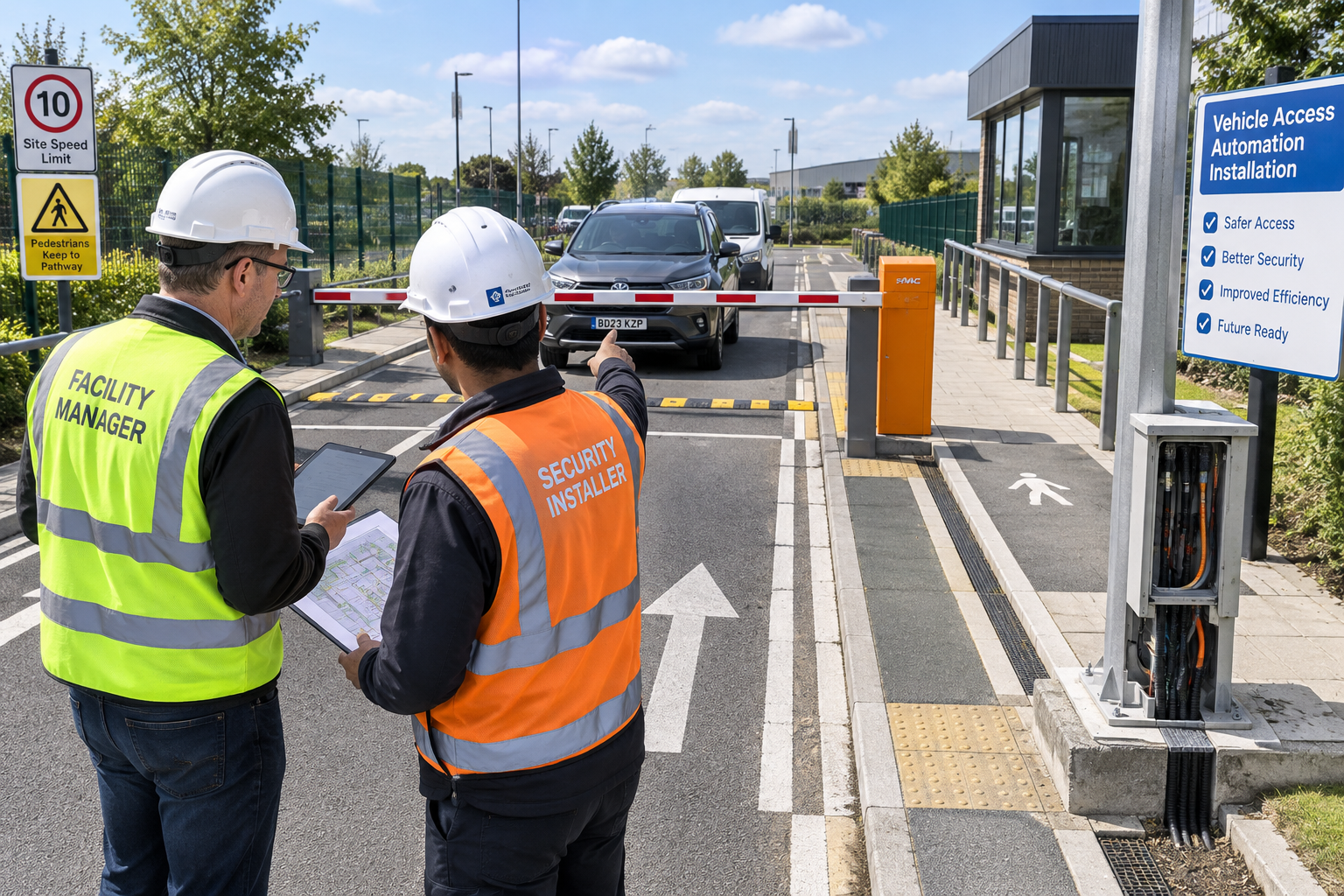
Planning a boom barrier installation involves careful preparation and documenting site-specific information. Facility managers and security heads can facilitate a smoother installation process and optimal system design by organizing a thorough site survey pack before engaging with installers.
Start with the Site Layout
Before requesting a boom barrier proposal, it is essential to document the site layout carefully. Facility managers should record the lane arrangement — how many vehicle lanes are there, and are they one-way or two-way? Assess the usable width available for boom barrier installation and note any overhead obstructions such as low-hanging cables, tree branches, or signage that could interfere with barrier arms. Consider waiting space for vehicles during peak times and pedestrian routes crossing or adjacent to the access point. This information will help installers propose solutions compatible with the site’s physical constraints and user flow.
Map Everyday Traffic and Exceptions
A thorough understanding of traffic patterns is critical. Identify peak arrival and departure times, vehicle types frequenting the site—cars, motorcycles, commercial trucks or two-wheelers—and how visitors are currently managed. Also, document delivery schedules and who is authorized to allow exceptions such as emergency vehicles or contractors. Planning routine access and exceptions together ensures the installed boom barrier system accommodates operational realities without disrupting site security or convenience.
Plan Power, Cabling and System Connections
Discuss available power supply options with your installer, including voltage, proximity to the installation point, and any backup sources. Cable routing must be planned to avoid damage risks and minimize civil work costs. Confirm where and how the boom barrier will connect to existing access control systems such as RFID readers, ANPR cameras, or centralized security software. Do not try to design wiring yourself; a qualified installer must assess cables and civil works requirements to suit your site’s infrastructure.
Discuss Safety and Service Access
Safety considerations are paramount. Ask your installer how pedestrian movement near the barrier will be protected and detected. Review emergency procedures for manual operation or barrier override during power outages or alarms. Weather exposure such as sun, rain or dust can affect component longevity; verify recommended protective measures. Also, confirm maintenance access possibilities for regular servicing without locking down access routes. Note that specifying safety devices and their installation can only be done by qualified professionals.
Build Your Site Survey Pack
Compile all gathered data into a compact, practical site survey pack for your installer. This helps ensure precise proposals and smooth communication. Include details on layout, traffic flows, power availability, safety, and service requirements. Use the checklist below to organize your documentation and questions.
| Item to Document | What to Record | Question for Your Installer |
|---|---|---|
| Site Layout | Lane arrangement, usable width, obstructions, waiting area | Can the barrier arm length and placement fit this layout? |
| Traffic Flow | Peak times, vehicle types, visitor management, exceptions | How will the system handle routine and exceptional access? |
| Power and Cabling | Power supply specs, cable routes, connection points | What are the power and cabling requirements here? |
| Safety | Pedestrian routes, emergency access, weather protection | How will pedestrian safety and emergency override be ensured? |
| Service Access | Ease of barrier maintenance access | What servicing access is recommended to minimize downtime? |
| Handover and Training | Documentation, staff training requirements | What handover procedures and training do you provide? |
Confirm responsibilities before handover to ensure smooth transition to your operations team. This includes verifying who will provide training and who resolves initial teething issues.
Frequently Asked Questions
What information should I collect before a boom barrier site survey?
Document the site before selecting the system. Start with lane and space layouts, vehicle flows including exceptions, power and cabling availability, pedestrian routes, safety concerns, and maintenance access. This comprehensive data lets your installer tailor solutions effectively.
Can an existing gate entrance be assessed for a boom barrier?
Yes. An existing gate entrance can be evaluated for boom barrier suitability. The site survey will record lane width and layout details, overhead and side obstructions, power availability, and traffic patterns to advise whether retrofitting or modifications are feasible.
Should I choose RFID or ANPR before the site survey?
Plan routine access and exceptions together. Choosing RFID or ANPR before the survey may lead to missed site-specific considerations. The site layout and traffic flows influence which technology integrates best; discussing both options with your installer after the survey is advisable.
To discuss your site survey and requirements further, contact First Idea Automation through their Automatic Boom Barrier product page. For details on access technologies, see the ANPR vs RFID site guide.
Prepare your site survey thoroughly to ensure the best fit for your vehicle access automation needs. Confirm responsibilities before handover and maintain clear communication with your installer every step of the way.