
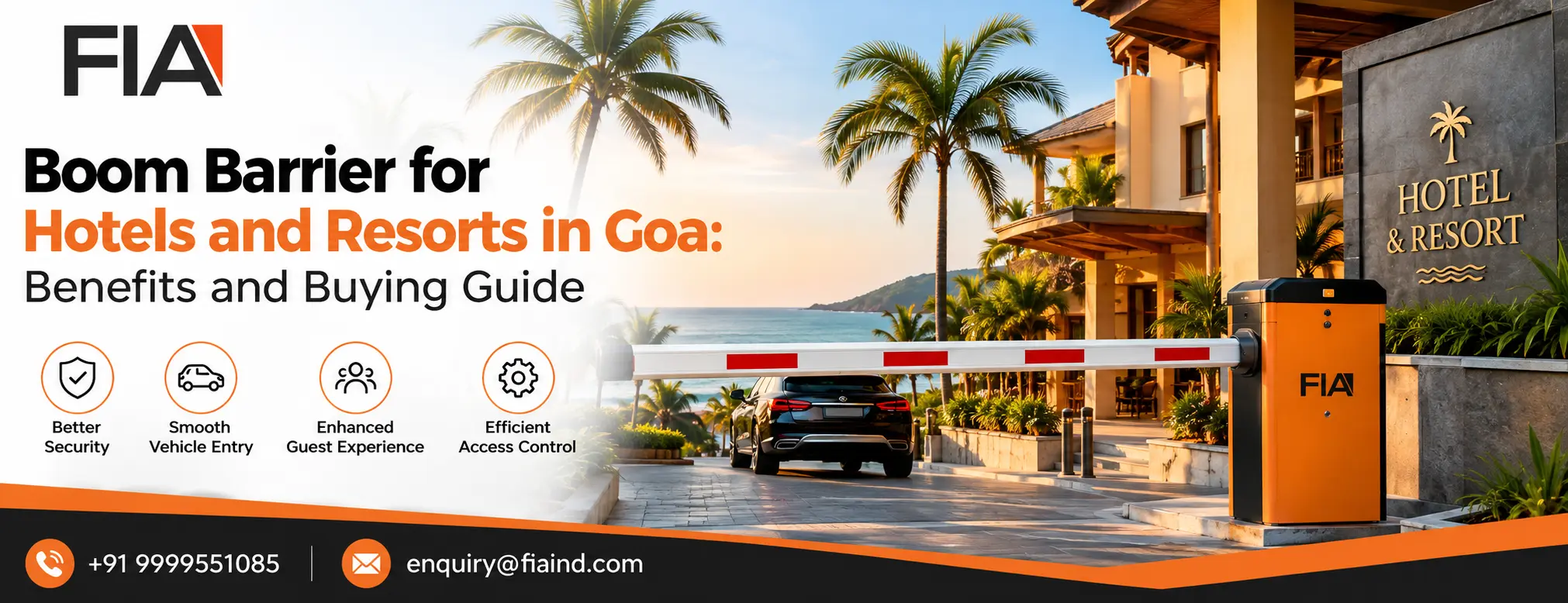
Anyone who has driven through Candolim on a December evening knows the scene. Taxis stop mid-lane, scooters squeeze through gaps, and a hotel driveway disappears under a pile of vehicles that don’t belong to guests. Now picture the same hotel check-in hour with a tour bus trying to turn in.
Goa’s hospitality properties run on first impressions, and the entrance is where those impressions start. A well-planned boom barrier turns that chaotic entry point into a calm, controlled one. This guide covers how Goa’s geography, weather, and tourism patterns shape the choice, so you buy once and buy right.
Why Goa Is Different from Any Other Hotel Market
Most access control advice is written for metro hotels with wide approach roads and dedicated security cabins. Goa is different in ways that matter:
- Narrow village lanes. Many resorts in Assagao, Anjuna, Morjim, and Agonda sit on single-lane roads, so any vehicle waiting to enter blocks everyone behind it.
- Strong seasonal swings. Traffic between November and February is nothing like the monsoon months, and your system must cope with both extremes.
- Salt, humidity, and heavy rain. Equipment that runs fine in Pune or Delhi can corrode within a couple of seasons near the Arabian Sea.
- Mixed vehicle traffic. Guests arrive by rented scooters, hatchbacks, SUVs, tempo travellers, and coaches, sometimes all within the same hour.
- Events and weddings. Destination weddings and corporate retreats bring sudden spikes of visitors in a single evening.
Benefits of a Boom Barrier at a Goan Hotel or Resort
Stops Outsider Parking Near Busy Beaches
Properties around Calangute, Baga, Colva, and Vagator often find day-trippers using their parking as a free beach lot. A barrier with RFID cards or a guest verification process keeps bays available for people who actually booked.
Keeps Narrow Roads Moving
A fast automatic barrier opens as the vehicle approaches, so cars don’t stop on the road. For lane-constrained locations, this single benefit can reduce both complaints and friction with neighbours.
Safer Driveways for Families
Goa is a family and long-stay destination. Children often run through resort driveways, and a controlled entry, with slow and predictable vehicle movement, lowers risk.
Handles Late-Night Arrivals
Beach-belt nightlife and late flights mean guests arrive at odd hours. Automated entry with a verified process means your night staff can manage with fewer people and fewer mistakes.
Supports Airport-Linked Travel
With both Dabolim and the Mopa airport serving the state, resorts in the north and south regularly receive early-morning and late-night arrivals. A reliable barrier keeps those check-ins smooth and secure.
Builds Trust and Better Reviews
Guest reviews often mention safety and parking. A tidy, professional entrance quietly improves both.
Matching the Barrier to Your Goa Location
“Best” depends heavily on where your property sits. Here’s how different zones tend to have different needs.
North Goa beach belt (Calangute, Candolim, Baga, Anjuna): High traffic, tight roads, heavy outsider parking pressure. Prioritize fast opening speed, RFID control, and strong anti-trespass features such as fencing arms.
Boutique villas and homestays (Assagao, Siolim, Saligao): Lower volume but high expectations for privacy. A sleek automatic unit with remote access and a quiet motor suits this setting.
South Goa resorts (Benaulim, Colva, Cavelossim, Palolem): Larger campuses, longer driveways, and more coach traffic. Longer arms, durable motors, and high-duty-cycle models are worth considering.
Panjim and city hotels: Compact entrances, basement parking, and mixed business and leisure guests. Folding arm barriers handle low-height clearances well, and ticketing or ANPR integration helps manage turnover.
Hillside and remote properties (Canacona, Sattari, Valpoi): Power reliability can be an issue. Look at battery backup or solar-supported operation.
Casino and event-heavy venues: These need high-speed barriers and queue management, since traffic arrives in waves.
Features That Matter Most in Goan Conditions
Corrosion Protection
Coastal air is the biggest enemy. Ask for galvanized or powder-coated housing, stainless or treated hardware, and sealed motor compartments. If the supplier cannot explain how the unit handles salt exposure, move on.
Monsoon-Ready Electronics
Heavy rain and humidity damage exposed circuit boards and loose cabling. Choose units with a good ingress protection rating and properly sealed junction boxes.
Power Backup
Storm-related outages are common in the monsoon. A barrier that locks shut during a power cut leaves guests stranded or blocks emergency access. Confirm battery backup and a manual release.
Safety Sensors
Loop detectors, infrared beams, and auto-reverse functions prevent the arm from lowering onto a vehicle. With scooters and rented cars constantly entering, this is not optional.
Duty Cycle and Speed
A busy resort may see hundreds of operations daily during peak season. Check the motor’s rated duty cycle, not just the brochure speed.
Integration Flexibility
Even if you only need basic entry control today, choose a system that can later connect to RFID, number plate recognition, CCTV, or your property management software.
Visibility and Looks
LED arm lights help at night on poorly lit lanes, and finishes can be matched to your property’s colour scheme so it feels part of the design.
A Practical Buying Process
If you’re comparing options for the best boom barrier in Goa, a structured approach beats chasing the lowest quote.
- Walk the entrance at peak time. Observe how many vehicles queue, where they stop, and what blocks the road.
- Measure properly. Road width, driveway length, and overhead clearance determine arm type and length.
- Define who gets access. Guests, staff, vendors, and event visitors may each need different permissions.
- Budget the full project. Include civil work, electrical points, cabling, accessories, and installation, not just the unit.
- Evaluate local service capability. The top boom barrier in Goa suppliers can reach your site quickly. A breakdown in December costs far more than a small price difference.
- Request nearby references. Ask to see or speak with hotels, resorts, or residential sites that use the same system.
- Read the warranty and service terms. Understand coverage, response time, spare parts availability, and annual maintenance options.
Installation and Upkeep for Coastal Properties
Even good equipment fails when installed badly. Insist on a correctly cured foundation, accurate alignment, and tested sensors before handover.
For the long run:
- Rinse and wipe the housing regularly to remove salt deposits
- Lubricate moving parts as the manufacturer recommends
- Check safety sensors every month
- Inspect cables, connectors, and seals before and after the monsoon
- Schedule professional servicing at least twice a year
A pre-season check in October is especially valuable, since it catches problems before guest numbers rise.
Mistakes Goan Property Owners Often Make
- Choosing inland-grade equipment. It may look identical but corrodes quickly near the coast.
- Underestimating peak-season load. A unit sized for off-season traffic struggles in December.
- Placing the barrier too close to the road. Vehicles then wait on the lane. Leave enough queue space inside the gate.
- Ignoring pedestrians and two-wheelers. Plan for scooters and walking guests, not just cars.
- Skipping the maintenance contract. Small issues become peak-season breakdowns.
Choosing a Partner Who Understands Goa
A product catalogue is not a solution. A good partner studies your road, traffic pattern, and guest profile, recommends equipment suited to local conditions, installs it correctly, and stays available afterwards.
To discuss your property, FIA’s team can visit your entrance, assess traffic patterns, and suggest a system that fits your layout and budget. [Phone / WhatsApp: +91 9999551085, email: enquiry@fiaind.com , and a “Book a Free Site Visit” https://www.fiaind.com/products/automatic-boom-barrier/]
Frequently Asked Questions
Which boom barrier is best for a beachside resort in Goa?
One with corrosion-resistant coating, sealed electronics, and a strong weather rating. Automatic models with fencing arms are popular where outsider entry is a concern.
Can a boom barrier cope with Goa’s monsoon?
Yes, provided it is built for wet conditions, with sealed components, proper drainage around the foundation, and protected wiring.
How much does a hotel boom barrier cost in Goa?
Cost depends on type, arm length, speed, and integrations such as RFID or camera systems. A site survey is the only reliable way to get an accurate quotation.
Will it work during a power cut?
Models with battery backup or a manual release will. Always confirm this before purchase.
How often should it be serviced?
Twice a year is a sensible baseline, ideally once before the tourist season and once after the monsoon.
Can it connect to parking or hotel software?
Many systems integrate with RFID, ANPR, and parking management tools. Ask your supplier about compatibility.
Conclusion
Goa’s charm lies in its relaxed pace, but a hotel entrance cannot afford to be relaxed about security and traffic. A boom barrier chosen for your exact location, built for coastal weather, and supported by dependable local service protects your guests, your parking, and your reputation.
Start with your own entrance, study your peak-season traffic, and work with a partner who knows Goa’s conditions. Done right, the barrier becomes one of the most quietly valuable investments on your property.
Get a Boom Barrier Quote for Your Goa Property
Planning a boom barrier for your hotel, resort, villa, or homestay? Talk to the FIA team for a site assessment and a tailored recommendation.
Phone / WhatsApp: +91 9999551085
Email: enquiry@fiaind.com
When you get in touch, share your property location, entrance width, and approximate daily vehicle count so the team can suggest the right system faster.